Frontiers in Telecoupling and Metacoupling Research for Addressing Global Sustainability Challenges
International Summer School on Geography and Sustainability 2026

Date: August 9-16, 2026
Location: Beijing Normal University (BNU), Beijing, China & online
Language: English
Target audience: Master's students, PhD students, Postdocs, and other researchers

I. Organization
Host: Beijing Normal University (BNU)
Organizer: Faculty of Geographical Science, BNU
Support journal: Geography and Sustainability
II. About the Summer School
Theme: Frontiers in Telecoupling and Metacoupling Research for Addressing Global Sustainability Challenges
Telecoupling refers to human-nature (or socioeconomic-environmental) interactions over distances. Metacoupling encompasses telecoupling, as well as interactions between adjacent systems (pericoupling) and within systems (intracoupling). Telecoupling and metacoupling are increasingly shaping global sustainability challenges, including biodiversity loss, climate change, pollution, and the degradation of ecosystem services and natural resources, such as land and water.
The International Summer School focuses on telecoupling and metacoupling research to address global sustainability challenges, aligning with global priorities such as the UN Sustainable Development Goals (SDGs), the Kunming-Montreal Global Biodiversity Framework, the UN Decade on Ecosystem Restoration, the UNFCCC Paris Agreement, and the Climate Change meeting at COP 30 in Brazil.
In addition to lectures, participants will have opportunities to discuss and work on team-based research projects on telecoupling or metacoupling to enhance learning and likely lead to high-quality publications. Participants can choose research projects related to telecoupling/metacoupling or have them suggested by instructors, and projects may continue beyond the summer school because publishing research often takes more time. (Research projects at similar training programs in the past have resulted in many high-quality publications in outlets such as Science.)
The lecturing topics include:
- Telecoupling and metacoupling frameworks
- Applications of the telecoupling and metacoupling frameworks
- Methods and tools for operationalizing the telecoupling and metacoupling frameworks
- Future directions of telecoupling and metacoupling research for addressing global sustainability challenges
- Writing high-quality papers
III. Agenda
- August 9 (Sunday): Registration
- August 10-14 (Monday-Friday): Lectures/ Projects/Discussion
- August 15 (Saturday): Participant Presentations/Discussion
- August 16 (Sunday): Departure
IV. Instructors
Instructors are experts on the theme, including members of the Chinese Academy of Sciences and the U.S. National Academy of Sciences, as well as authors of papers in Science and Nature family journals and PNAS. In addition to giving lectures, the experts will provide feedback and guidance on participants' research projects. Below are several confirmed instructors. (If needed, additional instructors will be available if the participants' specific interests go beyond those of the confirmed instructors.)
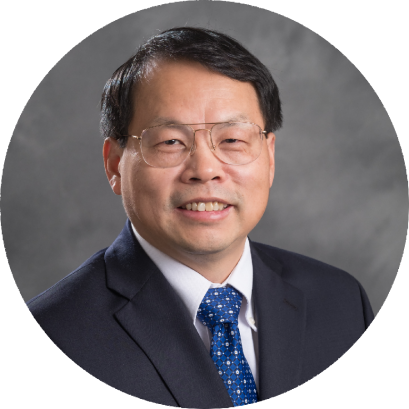
Jianguo Liu
Dr. Jianguo (Jack) Liu is an elected member of the U.S. National Academy of Sciences, American Philosophical Society, American Academy of Arts and Sciences, and Royal Norwegian Society of Sciences and Letters. He holds the Rachel Carson Chair in Sustainability, is a University Distinguished Professor at Michigan State University, and serves as founding director of the Center for Systems Integration and Sustainability. He is a world leader in systems integration for sustainability (e.g., integrating ecology with the social sciences, policy, and technologies to understand and promote global sustainability). He has been leading the development and applications of the telecoupling and metacoupling frameworks worldwide. He has served on the editorial boards of more than 20 international journals, such as Science. His pioneering work has been published in journals such as Science and Nature. His accomplishments have been recognized by numerous prestigious awards, including the Eminent Ecologist Award of the Ecological Society of America, the Guggenheim Fellowship, the Gunnerus Award in Sustainability Science, and the World Sustainability Award.
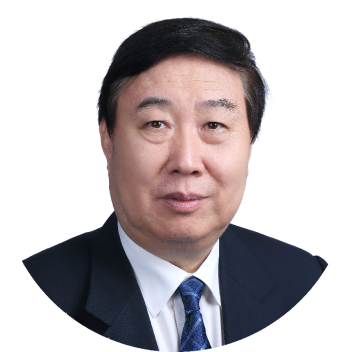
Bojie Fu
Dr. Bojie Fu is a Fellow of the Chinese Academy of Sciences, an International Honorary Member of the American Academy of Arts and Sciences, a Fellow of the Academy of Sciences for the Developing World (TWAS), a Corresponding Fellow of the Royal Society of Edinburgh, UK, and an Honorary Fellow of the Royal Geographical Society. He is a distinguished professor and director of the Academic Committee in the Research Center for Eco-Environmental Sciences, Chinese Academy of Sciences. He is also Vice-Chair of the International Geographical Union and Chief Supervisor of the Geographical Society of China. He has published over 600 papers in prestigious domestic and international scientific journals, including Science and Nature, as well as 10 books. He has won the China National Natural Sciences Award (2nd Class), the National Sciences and Technology Advanced Award (2nd Class), award for Distinguished Scientific Achievement of the Chinese Academy, Ho Leung Ho Lee Science and Technology Progress Award, Award of Distinguished Service of International Association for Landscape Ecology, Alexander Von Humboldt Medal of European Geoscience Union, and the CCTV 2019 Scientific and Technological Innovation Award.

Kenneth Frank
Dr. Kenneth Frank is a member of the U.S. National Academy of Education. He is MSU Foundation Professor of Sociometrics, Professor in Counseling, Educational Psychology, and Special Education, and adjunct (by courtesy) in Fisheries and Wildlife and Sociology at Michigan State University. He received his Ph.D. in measurement, evaluation, and statistical analysis from the University of Chicago in 1993. His substantive interests include the study of schools as organizations, social structures of students and teachers and school decision-making, and social capital. His substantive areas are linked to several methodological interests: social network analysis, sensitivity analysis and causal inference (http://konfound-it.com), and multi-level models. His publications, in outlets such as Nature, include quantitative methods for representing relations among actors in a social network, robustness indices for sensitivity analysis for causal inferences, and the effects of social capital in schools, natural resource management, and other social contexts.

Wenwu Zhao
Dr. Wenwu Zhao is a Professor at the Faculty of Geographical Science, Beijing Normal University. He is also Chair of the International Geographical Union Commission on Geography and Sustainability and an Associate Editor for the journal Geography and Sustainability. He is affiliated with the State Key Laboratory of Earth Surface Processes and Disaster Risk Reduction and the Institute of Land Surface System and Sustainable Development. His research focuses on integrated geography, human-environment system coupling, and sustainable development.
Zhenci Xu
Dr. Zhenci Xu is an Associate Professor at the University of Hong Kong. He is a human-environment researcher with a focus on sustainable development goals, footprint, food-energy-water-carbon nexus, ecosystem services, ecology, and China's development. He is interested in taking a holistic approach, such as integration of various components (e.g., causes, spatial-temporal scales, effects, feedbacks, environmental and socioeconomic interactions), to address the complexity of human-environment interactions and related sustainability issues such as sustainable development progress assessment, impacts of distant interactions on local sustainable development, and synergies and trade-offs between various dimensions of sustainability. He has published papers in journals such as Nature, Nature Sustainability, and Nature Communications.

Nan Jia
Dr. Nan Jia is a Research Associate at the Center for System Integration and Sustainability, Michigan State University, and the current lead developer of the Telecoupling Toolbox. Her research and development focus on advancing the Telecoupling Toolbox, a tool for analyzing telecoupling and modeling complex systems across multiple scales. She is leading efforts to transition the Toolbox to an open-source platform and to integrate large language models to create the Telecoupling Toolbox Agentic platform. This new platform allows users to build workflows automatically with no coding, understanding user needs and generating relevant workflows. Additionally, her work involves integrating ecological models, network analysis, and data science to study the impacts of multiple global shocks on sustainability, including climate change, pandemics, and geopolitical disturbances.
V. Registration
International applicants can pay in their preferred currencies, equivalent to the amount in Chinese Yuan. The fee will be automatically calculated between currencies.
- Online participation (without research projects): 600 RMB
- In-person participation (without research projects): 1600 RMB
- In-person participation (with team-based research projects): 3000 RMB (the participants with team-based research projects related to telecoupling or metacoupling will be selected according to team composition and mentoring capacity)
For participants registering for online or in-person participation (without research projects), please complete the application form and proceed with payment directly.
For participants registering for in-person participation (with research projects), please complete the application form and wait for further instructions via email before making the payment. If not selected for team-based research, participants may choose to be in-person (without team-based research), or be online only.
Note:
- The registration fee includes materials for summer school and meals. Accommodation is not included, as it will be arranged by the participants themselves.
- International students who register for in-person participation can apply for financial support, which is available in two tiers: 1,600 RMB (without research projects) and 3,000 RMB (with team-based research projects). For inquiries, please contact us via geosusconference@bnu.edu.cn.
- Deadline for registration with team-based research projects: May 15, 2026;
Deadline for registration without research projects: June 15, 2026. - Regarding the refund requests, please contact us via geosusconference@bnu.edu.cn. No refunds will be issued after June 15, 2026.
VI. Visa
For international students, please submit your information via https://bnu.17gz.org to obtain the letter of admission for your visa application.
Deadline: June 15, 2026